

Retail Trade Rewired: How Modern Businesses Win From Shelf to Screen
Understanding Retail Trade in Business
Retail trade is the business activity of selling goods and related services directly to end consumers for personal or household use. Unlike wholesalers, who sell in bulk to other businesses, retailers operate closer to the final customer and are shaped by consumer behavior, local market conditions, and brand experience. Retail includes everything from grocery stores and pharmacies to online marketplaces, specialty boutiques, and direct-to-consumer (DTC) brands.
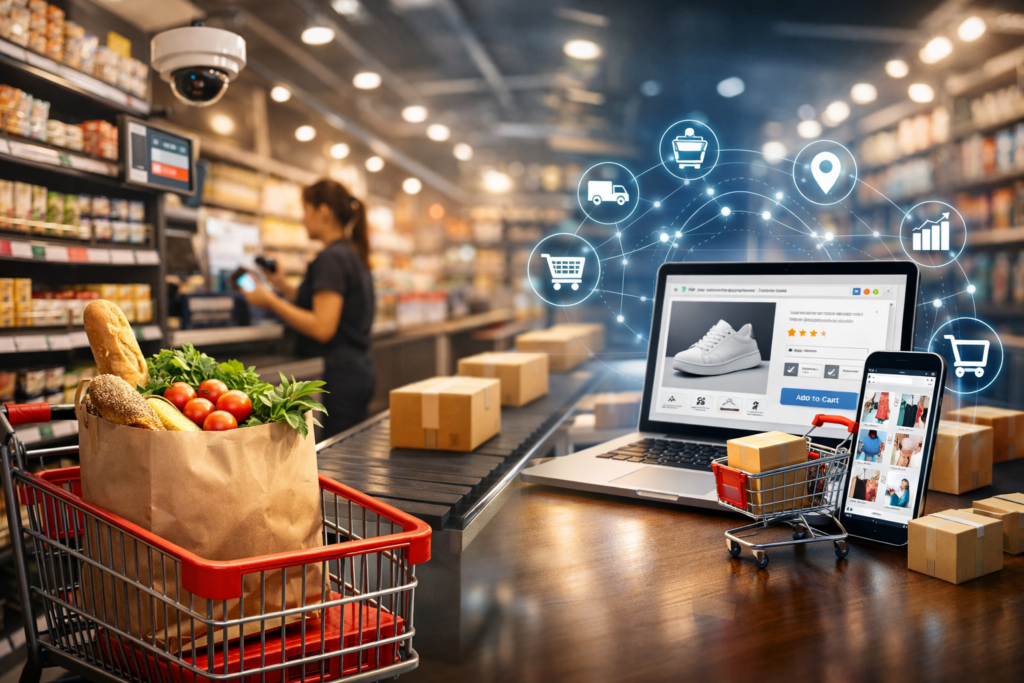
Modern retail trade is no longer defined by a single storefront. It is a system that blends merchandising, logistics, marketing, customer service, and technology to deliver the right product, at the right price, at the right time—through the channel the customer prefers.
Major Retail Formats and Where They Compete
Retailers compete by choosing formats that align with their target customers, product categories, and operating capabilities. Format decisions influence cost structure, staffing needs, and inventory strategy.
- Big-box and mass merchants: Compete on breadth, price, and supply chain scale.
- Specialty retailers: Focus on depth in a category (e.g., sports, electronics, beauty) and offer expertise.
- Convenience and small-format stores: Win on location and speed for frequent purchases.
- Department stores: Rely on curated assortments and brand partnerships, often in malls or urban hubs.
- E-commerce and marketplaces: Compete on selection, searchability, delivery speed, and trust mechanisms such as reviews.
- Omnichannel retailers: Integrate stores, web, and mobile for a seamless experience (e.g., buy online, pick up in store).
How Retailers Make Money: Core Revenue and Profit Drivers
Retail profitability depends on managing thin margins while delivering convenience and perceived value. While pricing matters, sustainable success typically comes from operational excellence and customer loyalty.
1) Gross margin and product mix
Retailers earn gross profit from the difference between selling price and cost of goods sold (COGS). Private label products, exclusive items, and differentiated assortments can improve margins by reducing direct price comparability.
2) Inventory turnover and cash flow
Inventory ties up cash and creates risk of markdowns. High turnover (selling stock quickly) improves liquidity and reduces obsolescence. Poor forecasting can lead to overstocks, discounting, and profit erosion.
3) Basket size, frequency, and lifetime value
Retailers work to increase average order value and repeat visits through loyalty programs, personalized offers, and product bundling. Long-term profitability often depends more on retention than constant customer acquisition.
4) Retail media and ancillary revenue
Many larger retailers monetize customer traffic and data through retail media networks, selling sponsored placements and advertising to brands. Additional revenue can come from warranties, services, subscriptions, and financial products.
Operations That Separate Top Retailers From the Rest
Retail operations sit at the intersection of customer experience and cost control. Effective retailers design processes that are resilient, measurable, and adaptable.
Merchandising and assortment planning
Assortment is a strategic choice: too broad and inventory costs rise; too narrow and customers leave. Strong retailers use demand signals, local preferences, and seasonality to tailor product selection by region and channel.
Supply chain, replenishment, and last-mile delivery
Speed and reliability increasingly define competitiveness. Retailers invest in distribution centers, store-based fulfillment, and third-party logistics to reduce delivery times. Replenishment systems balance service levels (in-stock rates) against carrying costs.
Store labor and customer experience
Labor remains one of the largest controllable costs. High-performing retailers schedule intelligently, train staff for high-impact moments (returns, product advice, checkout), and simplify routine work through tools like mobile point-of-sale and task management.
Returns and reverse logistics
Returns are both a customer expectation and a cost center, especially in e-commerce. Retailers optimize return policies, refurbish or resell items when possible, and use data to reduce preventable returns through better sizing, descriptions, and quality control.
Technology Reshaping Retail Trade
Retail technology is shifting from “nice to have” to essential infrastructure. The goal is not just automation, but better decisions and improved customer outcomes.
- Point-of-sale and unified commerce platforms: Connect store and online transactions to a single view of the customer and inventory.
- Data analytics and demand forecasting: Use sales history, promotions, weather, and local events to predict demand and reduce stockouts.
- AI-driven personalization: Tailors search, recommendations, and offers to improve conversion rates and basket size.
- Inventory visibility: Real-time tracking enables ship-from-store, curbside pickup, and accurate delivery promises.
- Fraud prevention and cybersecurity: Protect payment data, accounts, and supply chain systems as digital volume grows.
Strategic Challenges in Retail
Retail trade is exposed to rapid shifts in consumer demand and external pressures. Successful businesses treat these challenges as ongoing strategic disciplines rather than one-time projects.
- Price transparency and competition: Customers compare prices instantly, pushing retailers to differentiate through service, exclusives, and convenience.
- Inflation and cost volatility: Freight, labor, and raw materials can shift quickly, forcing smarter pricing and sourcing decisions.
- Channel conflict: Managing pricing and promotions across marketplaces, DTC sites, and stores requires tight coordination.
- Brand trust and reputation: Reviews, social media, and service recovery can influence demand faster than traditional advertising.
- Regulatory and ethical expectations: Privacy rules, labor standards, and sustainability reporting increasingly affect operations.
Trends Defining the Future of Retail Trade
Omnichannel as the default
Customers expect flexible fulfillment: delivery, pickup, lockers, and easy returns. Retailers that integrate systems and incentives across channels typically outperform those treating online and stores as separate businesses.
Experience-led stores
Physical retail is shifting toward discovery, service, and community—product demos, consultations, events, and same-day fulfillment—rather than purely transactional shopping.
Sustainability and circular retail
Resale, repair, refill, and recycling programs help retailers reduce waste while creating new revenue streams. Transparent sourcing and packaging reduction can also strengthen brand preference.
Conclusion: Retail Trade as a Capability System
Retail trade is best understood as a capability system that converts supply chain strength, merchandising discipline, and customer insight into dependable value. The retailers that win are those that align format, technology, and operations with clear positioning—whether that’s low price, curated expertise, speed, or experience. As consumer expectations evolve, retail businesses that treat adaptation as a continuous practice will be best positioned to grow profitably from shelf to screen.