

Beyond the Screen: How Entertainment Shapes What We Feel, Share, and Become
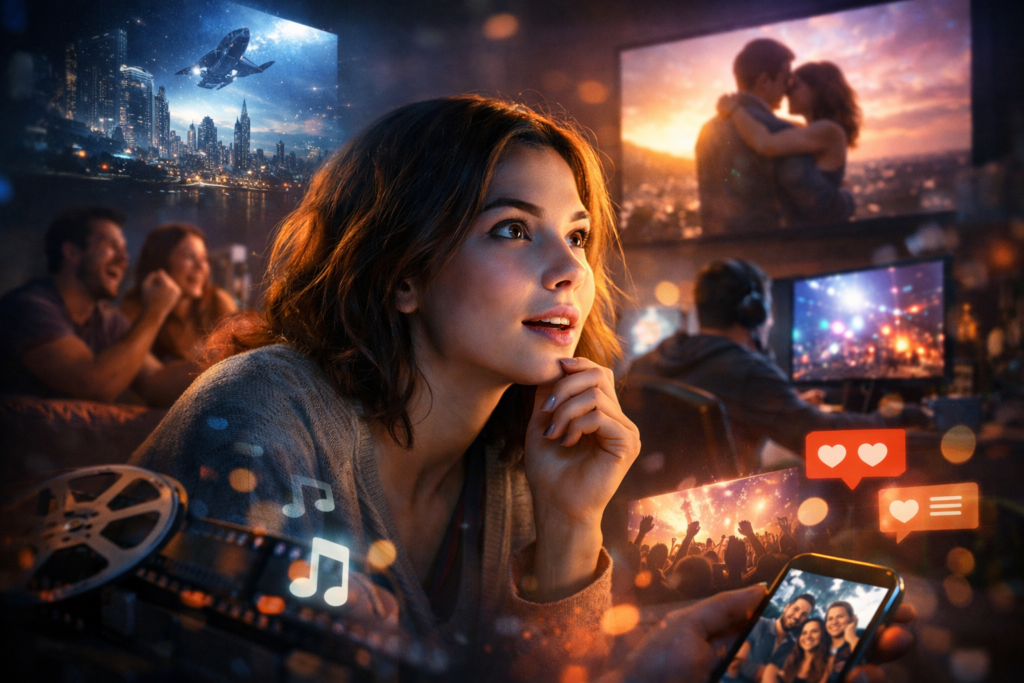
What Entertainment Really Means
Entertainment is often described as something we consume for fun, but its role is broader and more influential than that. At its core, entertainment is any activity, story, performance, or experience designed to capture attention, create emotion, and provide a meaningful break from routine. That “break” may be light and playful—like a comedy series—or deeply moving—like a concert that leaves a crowd silent in awe.
Because it works through emotion and attention, entertainment is tightly linked to how people socialize, how cultures tell their stories, and how technology changes daily life. It can be a casual pastime, a personal ritual, a shared community event, or a powerful cultural force that shifts language, fashion, and values.
The Many Forms of Entertainment
Entertainment spans far beyond movies and music. Each form uses different tools—visuals, sound, interactivity, live presence—to create engagement. The variety is part of what makes entertainment so universal: people can find something that fits their personality, energy level, and mood.
- Film and television: Structured storytelling, character arcs, and shared cultural moments—from blockbusters to niche streaming series.
- Music and live performance: Emotional expression and community, amplified by concerts, festivals, and local venues.
- Games: Interactive entertainment where choice, challenge, and mastery are central, including console games, mobile games, and tabletop experiences.
- Books, comics, and audio storytelling: Imagination-driven worlds, now expanded through audiobooks and podcasts.
- Sports and competition: Real-time drama, loyalty, and the thrill of uncertainty, experienced both in arenas and on screens.
- Social media and creator content: Short-form, personality-led entertainment that blends humor, commentary, education, and trends.
Why We Seek Entertainment
People turn to entertainment for many reasons, and most are deeply human. It helps regulate emotion, gives the mind a reset, and offers a sense of connection—even when enjoyed alone. A familiar show can feel like comfort; a suspenseful game can provide excitement; a documentary can satisfy curiosity.
Entertainment also functions as a social glue. Shared references (“Have you seen it?”), collective events (premieres, finals, tours), and fandom communities create belonging. In this way, entertainment is not only consumed—it’s discussed, remixed, quoted, and turned into identity signals.
Entertainment as a Cultural Engine
Entertainment reflects culture, but it also shapes it. Stories highlight what a society admires, fears, or debates; music and fashion travel together; comedy tests boundaries; and sports can unify people across regions and backgrounds. Even small shifts in what becomes popular can reveal larger changes in values and communication.
It can also broaden perspective. International films, translated novels, and global music platforms make it easier to encounter different ways of living and thinking. At its best, entertainment expands empathy by letting audiences inhabit experiences beyond their own.
How Technology Has Changed the Entertainment Experience
Technology has transformed entertainment from a scheduled, location-based activity into an on-demand, personalized stream. Streaming platforms replaced fixed programming; smartphones turned every spare minute into potential viewing time; and algorithms now influence what people discover next.
On-demand access and the “always available” effect
With nearly limitless libraries, entertainment has shifted from scarcity to abundance. This convenience is empowering, but it can also lead to decision fatigue and endless scrolling. The question becomes less “What’s on?” and more “What do I actually want right now?”
Creators, communities, and participation
Modern entertainment is increasingly participatory. Audiences don’t just watch; they react, clip, review, cosplay, and build communities. Creators can reach global audiences without traditional gatekeepers, and niche interests can thrive through dedicated fan bases.
Immersive and interactive frontiers
Virtual reality, augmented reality, and advanced game engines point toward more immersive forms of storytelling. Meanwhile, live-streaming and interactive formats blur the line between performer and audience, turning entertainment into a two-way experience.
The Economics Behind the Fun
Entertainment is also an industry with business models that affect what gets made and how it reaches people. Ticket sales, subscriptions, advertising, sponsorships, microtransactions, licensing, and merchandise all shape creative decisions. This is why some projects aim for mass appeal while others target dedicated niches.
Understanding the economics can make you a more informed consumer. For example, “free” content is often funded through attention and data, while subscription platforms compete for retention by encouraging longer sessions and constant novelty.
Healthy Entertainment Habits in a High-Attention World
Entertainment can enrich life, but it can also crowd out sleep, focus, and real-world relationships when it becomes default rather than deliberate. A healthier approach isn’t about avoiding entertainment—it’s about choosing it with intention.
- Match the medium to your goal: If you want to relax, pick comfort viewing; if you want stimulation, choose interactive or challenging content.
- Set “end points”: Decide on a natural stopping point (one episode, one match, one album) to prevent unplanned bingeing.
- Balance passive and active entertainment: Mix watching with doing—games with friends, live events, reading, or creative hobbies.
- Curate your inputs: Unfollow what drains you; seek creators and stories that add humor, insight, or genuine enjoyment.
- Make it social when possible: Shared entertainment often creates stronger memories than solitary scrolling.
The Future of Entertainment: Personal, Global, and Blended
Entertainment is likely to become more personalized, with recommendations shaped by behavior and mood, while simultaneously becoming more global through translation, distribution, and cross-cultural collaboration. Formats will continue to blend: games will borrow cinematic storytelling, films will adopt interactive elements, and live experiences will integrate digital layers.
Yet the heart of entertainment will remain familiar. People will still seek stories, laughter, suspense, beauty, and connection. The tools may change, but the purpose—creating experiences that move us—will endure.