

Where Meaning Meets Material: A Practical Guide to Arts-Driven Design
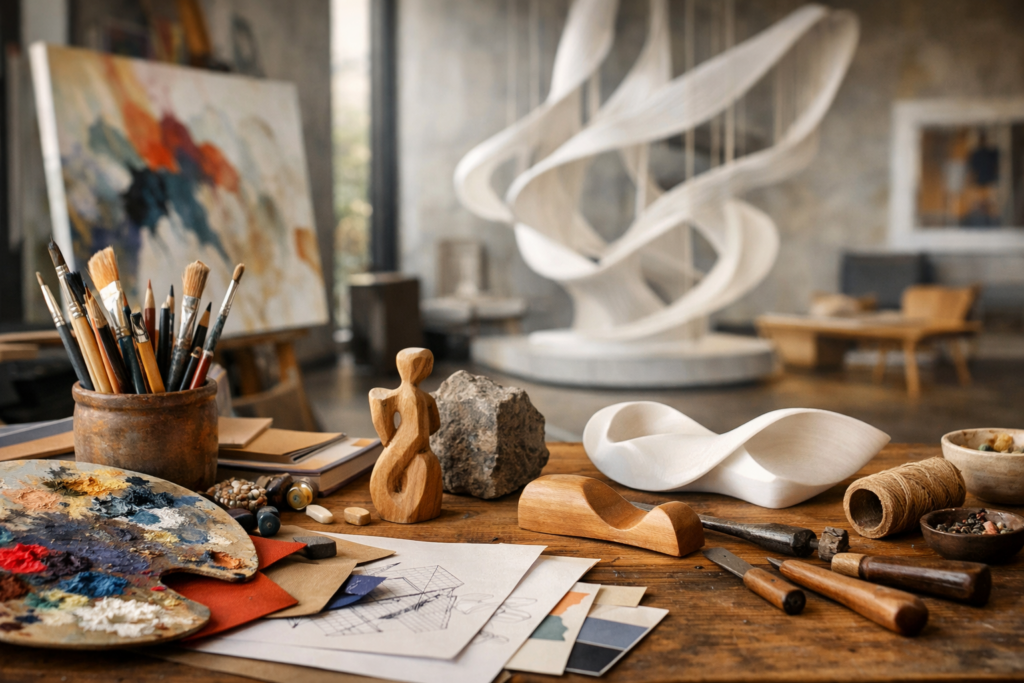
Arts and Design: Two Languages, One Conversation
Arts and design share tools—composition, color, form, narrative—but they often pursue different goals. Art is frequently associated with expression, ambiguity, and personal or cultural commentary. Design is usually tied to purpose: solving problems, serving users, and meeting constraints like time, budget, and manufacturing realities. Yet in practice, they constantly inform each other. The most memorable products, spaces, and digital experiences don’t merely function; they communicate, evoke, and create meaning.
Understanding Arts | Design as a single ecosystem helps creators make work that is both usable and emotionally credible. This blend is visible everywhere: a museum’s wayfinding system that feels like part of the exhibition, a brand identity that carries local history, or a chair whose silhouette references sculpture as much as ergonomics.
How Artistic Thinking Improves Design Outcomes
1) Better visual literacy and composition
Designers make thousands of micro-decisions—alignment, hierarchy, negative space, rhythm—that shape how people interpret information. Artistic practice trains the eye to see relationships between elements rather than treating them as isolated parts. A poster, interface, or package becomes clearer when it has a deliberate focal point, controlled contrast, and a coherent visual cadence.
2) Stronger storytelling and concept development
Great design is rarely “just pretty.” It frames a story: what this thing is, who it’s for, and why it exists. Arts-based methods—metaphor, symbolism, world-building, and narrative sequencing—help designers create concepts that stick. In branding, this might mean moving from a trendy logo to a visual system rooted in a brand’s values and tone of voice. In product design, it can mean shaping a device’s interaction so it feels calm, playful, or authoritative.
3) Expanded ideation through experimentation
Art invites play and discovery. Techniques like collage, rapid sketching, material studies, or improvisational prototyping can unlock options that a purely analytical workflow might miss. Exploration also reduces the risk of defaulting to familiar patterns—especially in digital design, where templates and established UI conventions can make products feel interchangeable.
Core Principles That Bridge Arts and Design
- Intentional constraints: Limits can focus creativity. A restricted color palette, a single typeface family, or a specific material can sharpen the identity of a project.
- Hierarchy and attention: Like a painting that guides the eye, good design directs users toward what matters most—primary actions, key information, or emotional cues.
- Material honesty: In physical and digital work, materials (or “digital materials” like motion and sound) should behave believably. Honest textures, consistent lighting, and natural interactions build trust.
- Coherence across touchpoints: An artistic “series” mindset—variations on a theme—helps designers build systems: icon families, component libraries, signage sets, or packaging lines.
- Ambiguity with purpose: Art often embraces ambiguity; design must be understandable. The bridge is purposeful ambiguity: leaving room for curiosity without sacrificing clarity.
Process: From Studio Practice to Design Practice
Research as observation, not just data
Design research can borrow from artistic observation: sketching in public spaces, photographing patterns in vernacular typography, or mapping how people move through environments. These practices surface insights that surveys may not catch—like unspoken discomfort, delight, or workarounds people use to overcome friction.
Iteration as critique
Studio critique is one of the most transferable arts practices. A critique-friendly design culture separates the work from the person and focuses on evidence: What is the goal? What are we seeing? What is the impact? Rather than debating taste, critique frames decisions around intention, audience, and context.
Prototyping as material exploration
Artists test pigments, paper weights, glazes, or found objects; designers test prototypes. The shared lesson is to build early and often. In digital design, this might mean clickable prototypes with realistic content. In industrial design, it may mean rough foam models to validate scale before perfecting surfaces. Prototypes reveal what drawings cannot: how something feels, how it behaves, and whether it communicates correctly.
Where Arts | Design Shows Up Today
Digital products and interfaces
Illustration, motion design, sound design, and micro-interactions are not decorative extras; they shape comprehension and emotion. A subtle animation can confirm success or reduce anxiety during loading. A well-crafted icon set can make complex tools feel approachable. Artistic direction ensures these elements are consistent, culturally aware, and aligned with brand personality.
Spatial and experiential design
Exhibitions, retail spaces, festivals, and public installations increasingly blend architecture, graphic design, lighting, and performance. Here, arts thinking helps designers choreograph attention over time. The “user journey” is literally a journey: entering, pausing, discovering, and remembering.
Craft, product, and sustainable materials
Renewed interest in ceramics, textiles, and woodworking reflects a desire for tactile authenticity. Designers collaborating with craftspeople can create products with longer lifespans and stronger emotional attachment—two factors that support sustainability. Material choices become part of the story: repaired objects, recycled inputs, modular systems, and finishes that age gracefully.
Ethics, Culture, and Responsibility
Arts and design both shape culture, and that influence carries responsibility. Visual systems can include or exclude; products can empower or exploit. Ethical Arts | Design considers accessibility (contrast, legibility, inclusive interaction), cultural context (avoiding appropriation or stereotype), and long-term effects (waste, persuasion patterns, data privacy).
A helpful practice is to audit a project for “hidden audiences”: not just the ideal user, but also the edge cases—people with disabilities, non-native language readers, low-bandwidth contexts, or communities affected by supply chains. When the work is both aesthetically thoughtful and ethically grounded, it earns trust.
Practical Ways to Strengthen Your Arts | Design Practice
- Keep a reference library: Collect examples across art history, graphic design, film stills, typography, and everyday visual culture. Add notes on why each reference works.
- Do constraint studies: Redesign a familiar interface using only two colors, or create a poster with only type and spacing—no imagery.
- Translate across mediums: Turn a poem into a layout grid, a song into a motion rhythm, or a sculpture into a product silhouette.
- Practice critique: Ask peers to respond to goals and impact, not preference. Document what changes and what improves.
- Prototype the “feel”: Test not only usability, but also mood—through motion, tone of voice, sound, and texture.
The Value of Designing Like an Artist
When design adopts the rigor of purpose and the depth of artistic exploration, it becomes more than problem-solving. It becomes meaning-making—work that is functional, beautiful, and resonant. In a world crowded with products and messages, Arts | Design offers a durable advantage: the ability to communicate clearly while still leaving room for wonder.